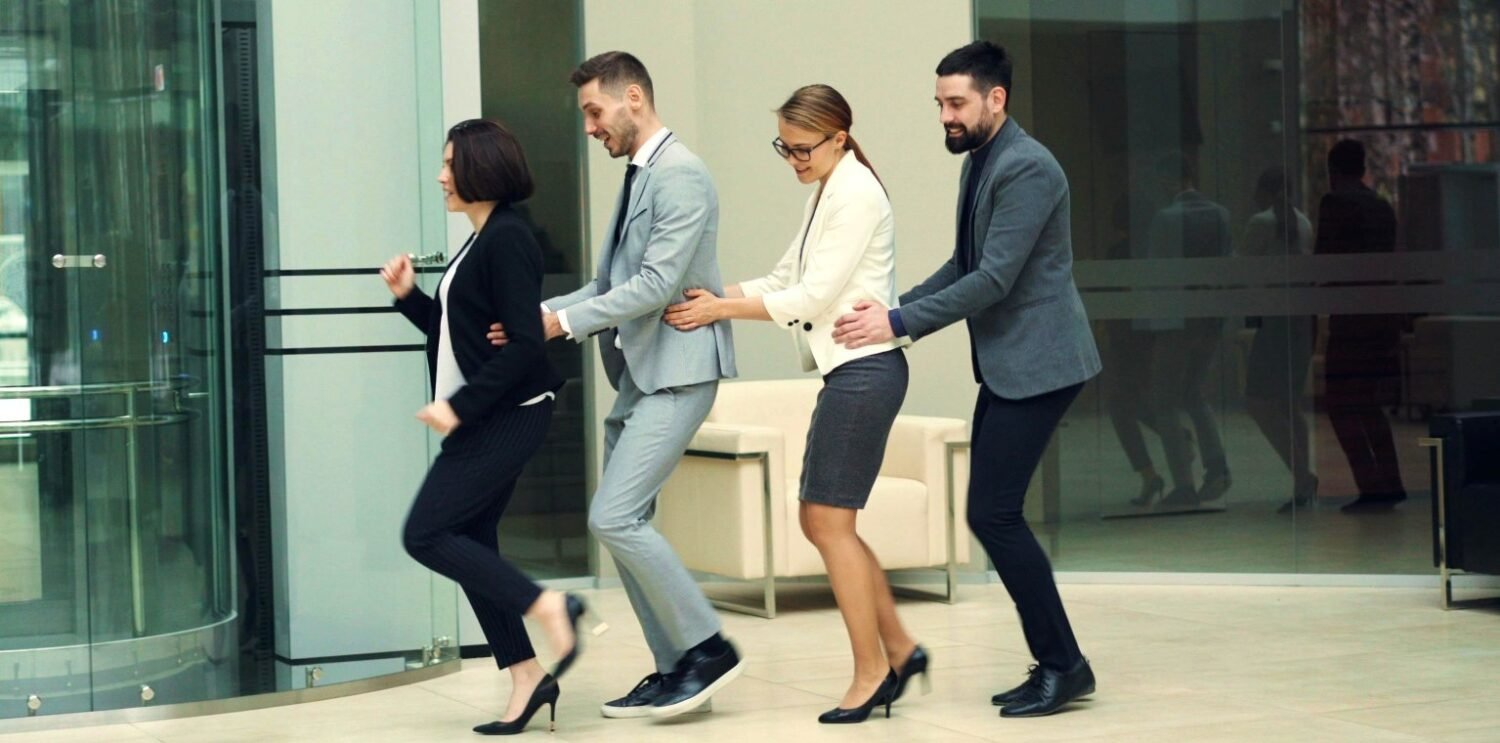
Whether you struggle to find time to exercise or already exercise regularly but spend much of your day sitting, exercise snacks could be a simple way to get more movement into your day. These short bursts of physical activity can take just a few seconds or minutes and can be fitted around your existing routine.
By using habit stacking — attaching a new behaviour to something you already do every day — you can create simple prompts to move more often, without having to find time for another full workout. In this article, we’ll show you how to combine the two to make movement a more natural part of your day.
What is habit stacking
Habit stacking is a behaviour change technique where you attach a new habit into a well-established existing routine. It works because the existing habit acts as a natural trigger for the new behaviour. Because the existing habit acts as a cue, you don’t have to rely as much on memory or willpower to remember the new behaviour. The new behaviours are often small changes, making them more manageable and easier to repeat consistently.
What is exercise snacking
Let’s clear something up first…Exercise snacking has nothing to do with food! It is short bursts of physical activity, lasting a few seconds to a few minutes that you can spread throughout your day.
Exercise snacks can offer a range of benefits, depending on the type, intensity and frequency of the activity. They can help increase overall physical activity, break up periods of prolonged sitting and, when performed regularly and at sufficient intensity, contribute to improvements in cardiovascular fitness, strength and balance. They may also support mental wellbeing and, for some people, help maintain physical function and reduce the risk of falls. For more information on exercise snacking read our article on exercise snacking.
3 steps to combine habit stacking with exercise snacking
So now we know what habit stacking is, how do we combine it with exercise snacking?
1. Identify your existing habits
Think about your typical day and identify three things you already do consistently.
2. Choose your exercise snacks
Pick three simple exercises that you’d like to incorporate. These could include strength, cardiovascular or balance exercises.
3. Stack them together
Attach each exercise to an existing habit that naturally occurs before it.
Some exercise snacks can be more structured, while others are simply opportunities to move rather than sit. Here are some examples:
- While the kettle boils → 10 squats or calf raises
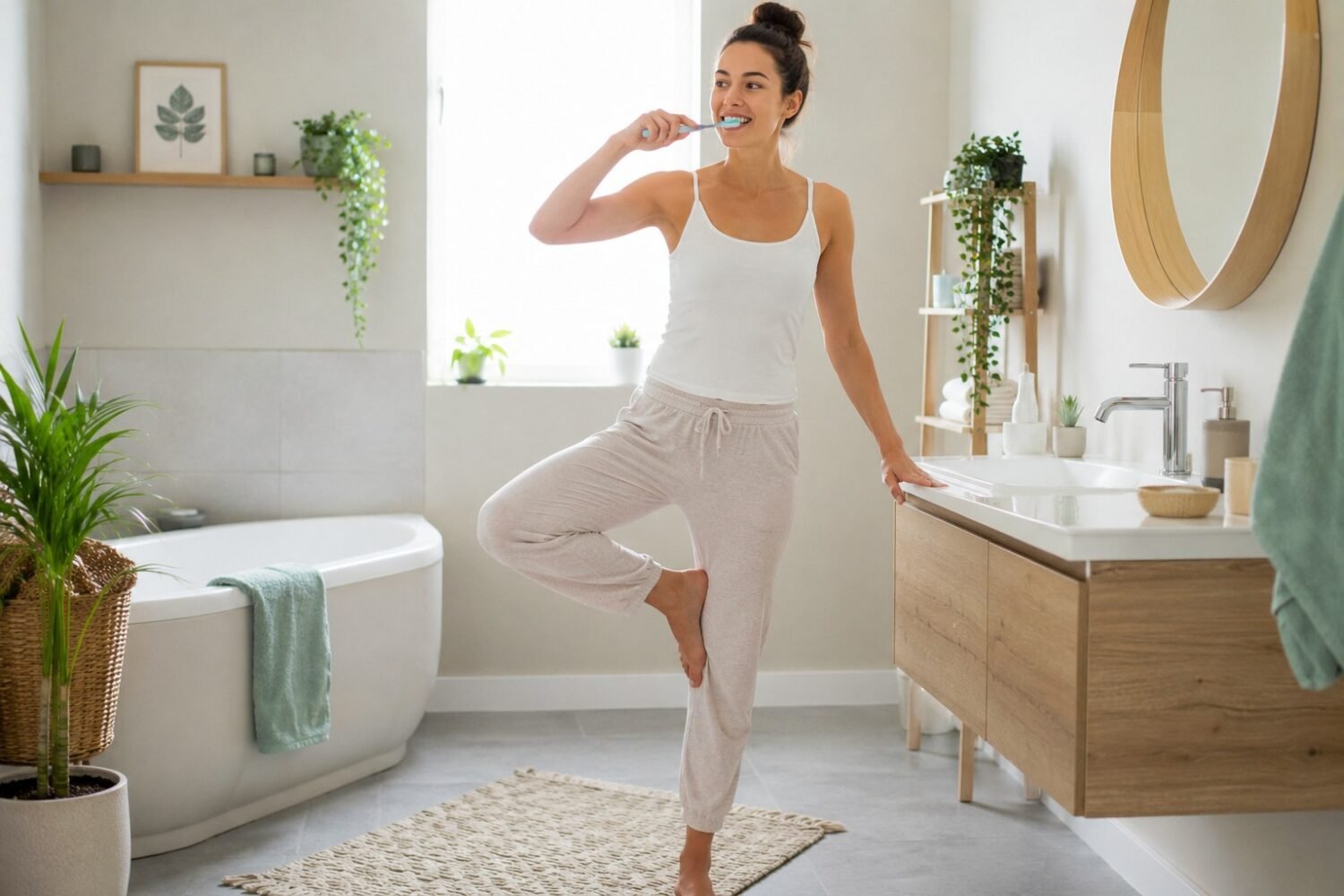
- While brushing your teeth → stand on one leg for 20–30 seconds each side
- When you’re on the phone → walk around rather than sitting down
- After finishing a meeting → walk around before starting your next task
- After using the toilet → walk up and down the stairs once
- While waiting for the microwave → march on the spot
Remember, an exercise snack can be very short. Start with an amount that feels manageable, even if it’s just a few repetitions or 10 seconds of activity. As it becomes part of your routine, and you feel able to, you can gradually increase the amount.
So why not give it a try? Pick three habits you already do every day and attach a short burst of movement to each one. If you already exercise regularly, think of exercise snacks as a way to break up periods of sitting and add more movement to your day. If you struggle to find time to exercise, they can be a simple way to get started. Start small, keep it manageable and build from there. You may be surprised how much movement you can accumulate without finding extra time in your day.
A quick safety note: Choose exercises that are appropriate for your ability and surroundings. If you’re new to exercise, start gently and build up gradually. For balance exercises, make sure you have something stable nearby to hold if needed.