
Want to make some positive changes to your health and wellbeing? Perhaps for yourself, your family, or both? Knowing where to start can be difficult. There is so much health information online, along with social media trends and conflicting advice, that it can quickly become overwhelming.
The good news is that improving your health doesn’t have to mean changing everything at once. There are several areas of our lifestyle that can influence our health and wellbeing, and small changes in each of these can add up over time.
Start small
You don’t need to make five changes today. Choose one area that feels achievable and start there. Once it becomes part of your routine, build on it.
1. Move more – start with your steps
Increasing your daily steps is one of the simplest and most accessible ways to become more active. Regular walking and other forms of movement can help support cardiovascular health, blood sugar control, bone health, mobility and mental wellbeing.
You don’t need to aim for 10,000 steps a day to benefit either. This often-quoted figure isn’t a requirement for better health. The target originated from a Japanese marketing campaign rather than a scientific recommendation, and research has since shown that health benefits can occur at lower levels of activity. In fact, research suggests that walking as few as 2,300 steps is associated with a lower risk of dying from cardiovascular disease.
Walking outdoors also gives you the opportunity to spend time outside, while weight-bearing activity can help support bone health and mobility.
Ideas to get started:
- Take the stairs.
- Get off the bus one stop earlier.
- Walk to the local shop instead of driving.
- Walk while you are on the phone (this can be an easy way to build up your steps.)
2. Exercise – build strength and fitness
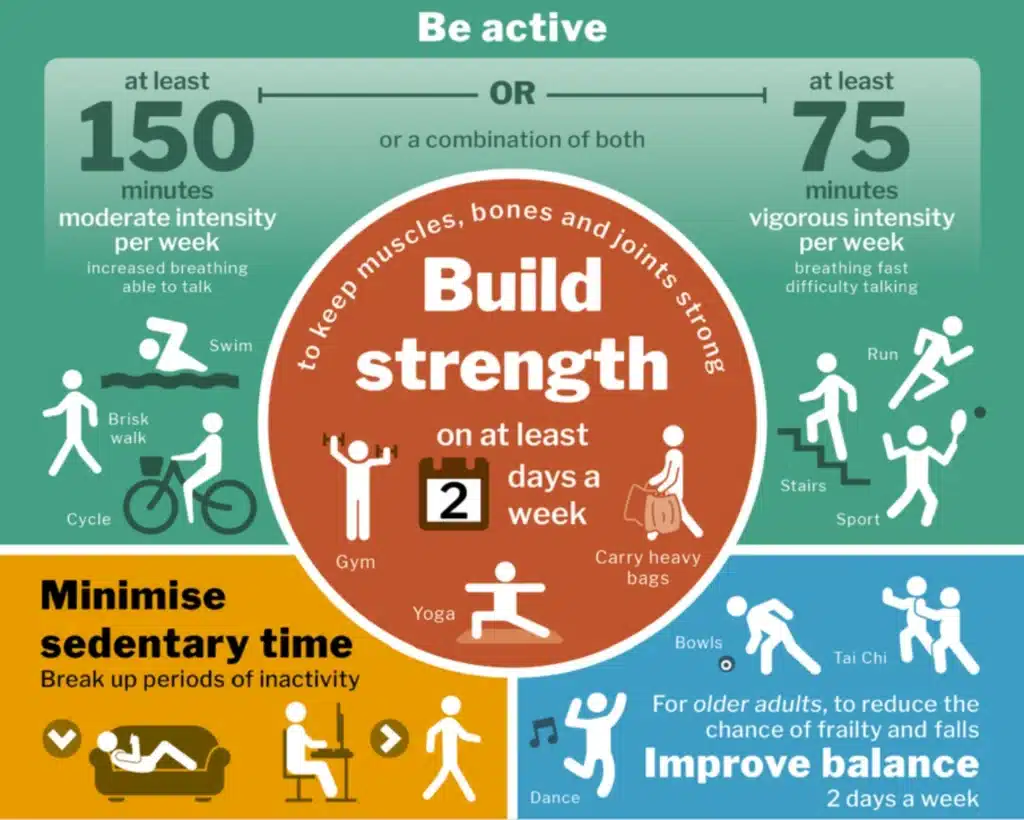
UK guidelines recommend that adults aim for at least 150 minutes of moderate-intensity activity each week, or 75 minutes of vigorous activity, alongside muscle-strengthening activities on at least two days a week. It is also important to reduce long periods of sitting.
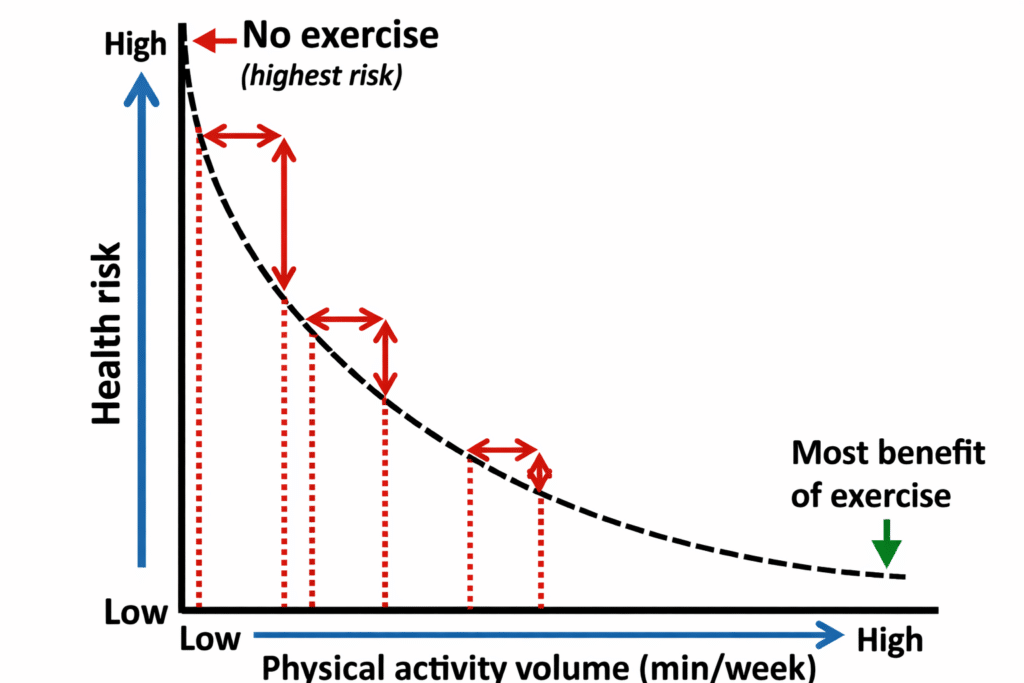
However, you don’t have to reach these targets straight away. Research suggests that the relationship between physical activity and health is curvilinear, meaning that the biggest gains can occur when someone moves from doing very little activity to doing some. So even adding a few minutes of exercise to your day can be a useful place to start. Over time, you can gradually build up towards the UK guidelines.
One way to start is with “exercise snacks” – short bursts of activity that can be spread throughout the day. You don’t always need a dedicated hour, a gym membership or a complicated workout plan. A few minutes of movement, repeated throughout the day, can be a realistic way to get started.
Reducing your time sitting is another area we can take control of without interrupting our day. Try breaking up long periods of sitting by standing up and moving around regularly. A reminder on your phone or smartwatch can help.
Ideas to get started:
- exercise snacking – squats, stair climbing, jumping jacks, standing on one leg while you brush your teeth. Link this to an existing habit to make it more realistic
- To reduce your sedentary time, set a move reminder during the day, take a walk after any meal and walk while on the phone
3. Eat well – give your body what it needs
Good nutrition provides the energy and nutrients our bodies need to function well. What we eat can influence our energy levels, physical and mental health, immune function and long-term health. You may hear we need a ‘balanced diet’ and the government has produced the ‘Eatwell Guide’.
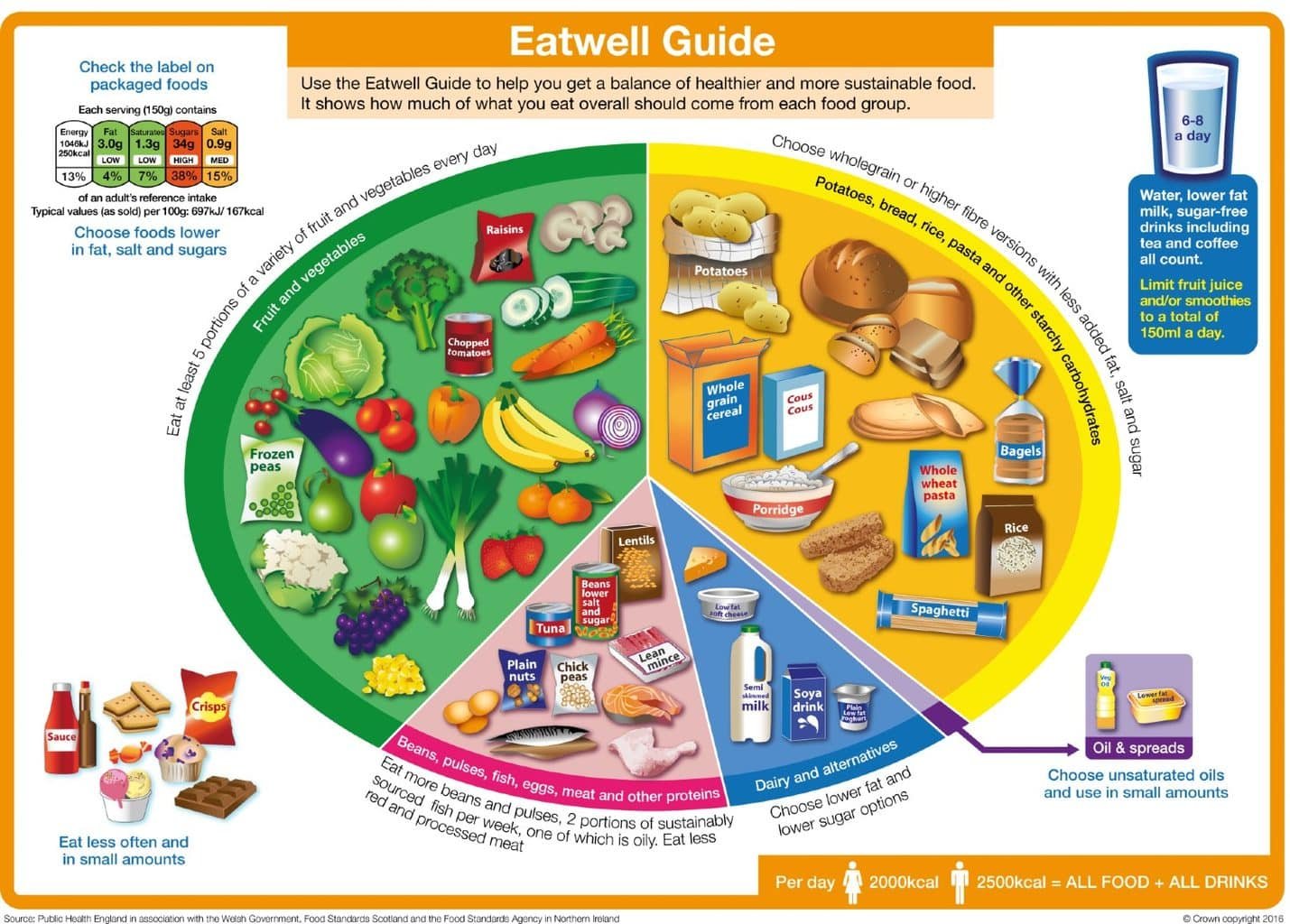
The Eatwell Guide provides a useful starting point for thinking about a balanced diet, showing the different types of food we should include and the proportions we should aim for. Again there is so much information online and your nutrition is specific to you, but this may be a good place to start. Carbohydrates, protein and healthy fats are all needed in your diet and the infographic can provide ideas of different sources of your required macronutrients.
Ideas to get started:
- Depending on your current diet, a useful starting point might be to eat more whole or minimally processed foods, such as vegetables, fruit, wholegrains, beans, pulses, nuts and seeds, while having foods high in saturated fat, salt and sugar less often. This takes a bit of planning and maybe prepping but it doesn’t have to be expensive if you shop around.
- Include a variety of protein sources, including beans, lentils, peas, eggs, tofu, fish, dairy or dairy alternatives, meat and nuts.
- Include plenty of colourful vegetables and salad along with some fruit in your diet. Use tinned and frozen to keep the cost down and stop spoiling.
4. Sleep – give your body time to recover
Sleep is fundamental for health and plays an important role in the body’s maintenance and recovery. NHS guidance says most healthy adults need around 7–9 hours, although individual needs vary. Good-quality sleep supports our physical and mental health, including mood, concentration, immune function and metabolic health.
As you can see, sleep is pretty important. Sleep doesn’t always come easily, but forming a good sleep hygiene routine can help.
Ideas to get started:
- Come up with a night time routine and stick to it.
- Try switching off phones, tablets and other screens around an hour before bed if you find they interfere with winding down.
- Go to bed and get up at the same time every day
5. Look after your mental wellbeing
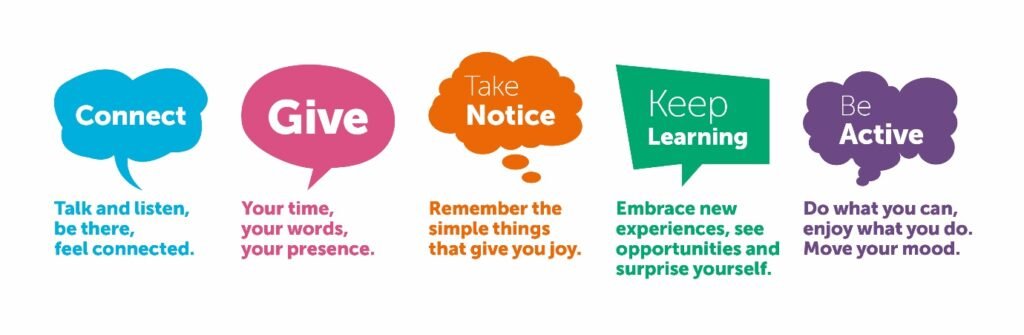
Mental and physical health are closely connected. Looking after your mental wellbeing can support how you feel, cope with everyday life and manage challenges. There is a lot of evidence emphasising the importance of mental wellbeing and the NHS has developed the ‘5 steps to mental wellbeing ’. These include:
- Connect with other people
- Be physically active
- Learn new skills
- Give to others
- Pay attention to the present moment/mindfulness
Ideas to get started:
- Message or call someone you haven’t spoken to recently.
- Take a few minutes to notice what’s around you – what you can see, hear and feel.
- Write down three things you’re grateful for that day, or that made you smile.
Takeaway
We’ve covered five areas that can contribute to a healthier lifestyle: moving more, exercise, nutrition, sleep and mental wellbeing. Trying to change all of these at once, however, can quickly feel overwhelming. And that’s exactly why small changes matter.
You don’t need to tackle all five areas at once. Pick one small change that feels realistic for you and give it a try. Once it becomes part of your routine, you can build on it or choose another area to work on.
Improving your health is a process, not a challenge to complete perfectly. Small changes, repeated consistently, can add up over time. So start where you are, choose something that fits your lifestyle and see how you feel.