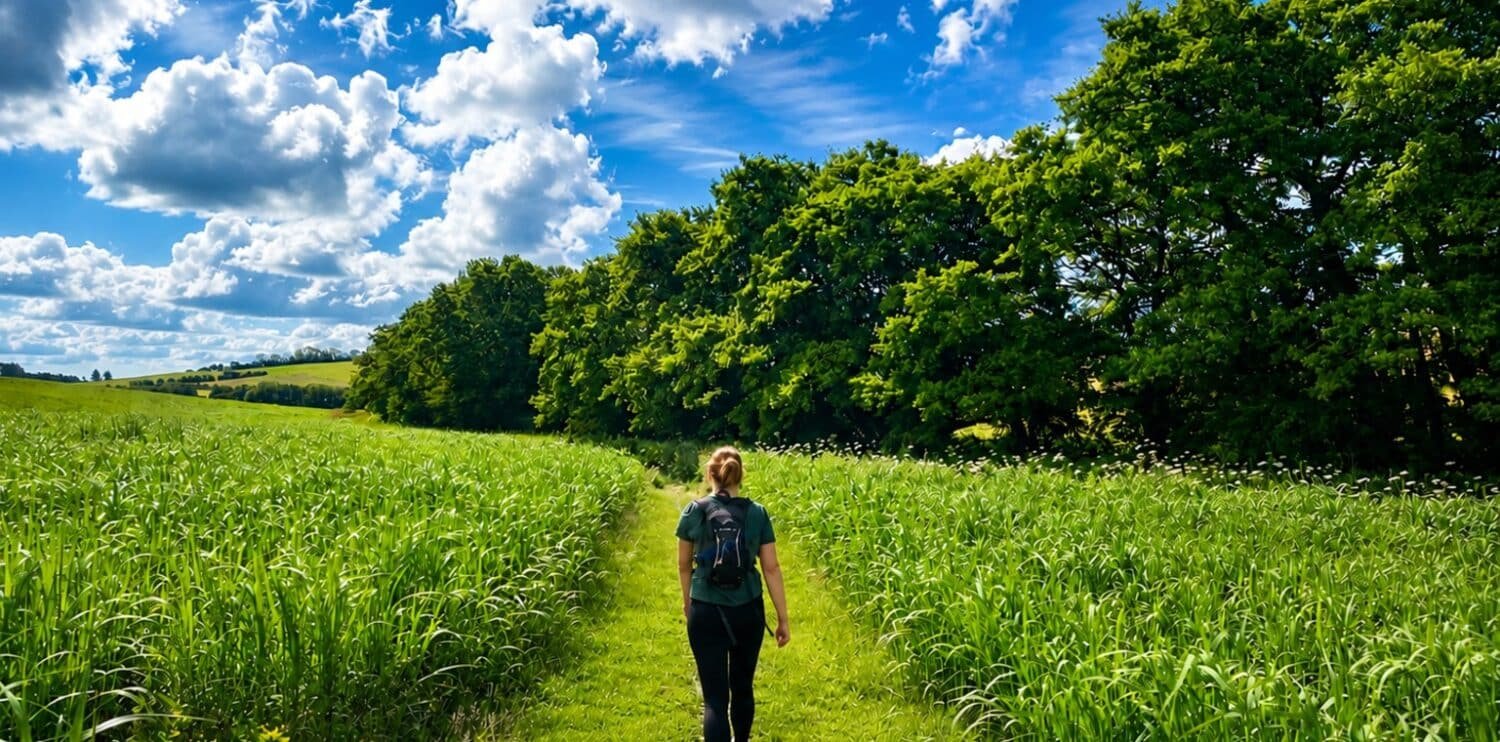
National walking month takes place annually throughout May. The month encourages everyone to focus on walking (or wheeling) daily and to think about the benefits that walking can do for our health, whether it is physical or psychological.
This event first started with charity groups like Living Streets, who this year will be highlighting the benefits of walking for women. Their focus is on getting outside every day of May for health, wellbeing and enjoyment.
The month of May typically has better UK weather (not too hot, cold or wet), so getting outside for a full 31 days is more likely. The purpose of National Walking Month is to highlight the many benefits that we can get from the accessible activity of walking. Let’s look at these in more detail…
Benefits of walking
Walking (or wheeling), is a simple and free activity that almost everyone can access. The low joint stress and versatility of walking, means it’s a winner for most people. Even if we do have bad weather, there are virtual workouts to get your steps done indoors! I remember these in covid and unless I have a series to finish watching, I prefer to get outside. However they do have their place for some and there are truly beautiful landscapes to enjoy on the screen.
Walks can be adapted from a stroll on flat, even terrain, to challenging terrain with hills and intervals. The great outdoors can be enjoyed while out walking and we can benefit from all the health benefits of being out in nature. Walking can easily fit into our busy schedules. If you have errands to do such as the school run or shopping, a walk can be done simultaneously. Remember though a walk should be about enjoyment and taking in your surroundings, so enjoy it, don’t just get it done to tick a box.
Key health benefits of walking:
Cardiovascular health
Just 11 minutes a day of moderate physical activity such as brisk walking lowers the risk of an early death according to researchers from the University of Cambridge (BHF). The research looked at over 196 peer reviewed studies, with more than 30 million people and found it also reduced the risk of developing; heart diseases, circulatory diseases and some cancers.
Walking leads to improvements in the circulatory system; the heart muscle is strengthened, blood pressure is reduced and blood flow is improved. Consistent, brisk walking increases artery flexibility, boosts nitric acid production and improves cholesterol profiles.
Improved mental wellbeing
Walking helps develop the relationship between our physical and mental health. Walking releases endorphins which make us feel good. At the same time stress hormones such as cortisol are reduced. This helps us feel relaxed and less stressed.
Weight management
Regular walking boosts metabolism and can help with weight loss. It can also break up sedentary time which can be detrimental (see article on ways to cut sedentary time). More recent research has looked at walking as a weight loss tool and shown positive results for some. Being mindful of adjusting the variables of walking and combining it with healthy nutrition, is important if weight loss is a goal for you.
Stronger bones
Walking can improve bone strength particularly in the lower limbs and spine due to it being a weight bearing activity, which stimulates bone remodelling. As we age, walking can slow age related bone loss, but it often needs to be coupled with resistance training for significant increase. Also resistance training will be needed for bone health in the upper body, which is not targeted through conventional walking.
Stronger muscles
Walking builds muscle but only to a limited extent. Usually we see improvements in tone in the lower limbs that are being used. Most improvements will be seen in sedentary individuals who are new to this activity. Older individuals will benefit from walking to target sarcopenia that happens with age. Hypertrophy or muscle growth, is not seen with walking alone, but coupled with resistance training you can target hypertrophy and the upper limb muscles too.
Improved sleep
Walking for some people improves sleep by regulating your circadian rhythm. A morning walk outdoors provides natural sunlight exposure, helping to regulate melatonin production and aligning the body to the 24 hour clock. Walking in the morning, afternoon or evening all have different, powerful effects on the body and sleep. One important factor whenever you walk is consistency is key. Regular walking daily acts as a repetitive signal to the body when to be awake and asleep.
Increased longevity
Walking increases longevity by improving cardiovascular health, reducing chronic disease risk and strengthening muscles. The improvements in weight management, wellbeing and sleep, alongside cellular ageing protection, makes walking a must for longevity.

Top tips for maximizing walking benefits:
This depends where you are in your fitness journey and any conditions you have. So set goals that are centred around you. If you’re not sure contact your GP or a fitness professional.
Pace
Again depending where you begin, but the aim is to walk at moderate speed for at least 30 minutes on most days. Moderate intensity is still being able to hold a conversation while you walk (remember: walk and talk; it rhymes – which helps!), but you will feel a bit warmer and your breathing rate will have gone up a bit.
Consistency
The challenge is for the month of May, so a bit everyday is perfect. Build up as you are able to. Consistency over perfection.
Intensity
If walking is too easy or not stimulating, you can change the stressor to target different fitness parameters. This might include adding in hills, changing speed, or adding a weighted vest or backpack.
Where to walk
There are some great places to walk and scenery to take in. So pick your favourite places and reap the benefits.
Make it social
Why not take a friend, turn walking into a social event. This is not only good for our physical health but also our wellbeing too, increasing accountability and decreasing isolation. And let’s be honest, who doesn’t enjoy a catch up and a natter with a friend,
So will you take the challenge – A month of walking this May?
Here are some ideas of walking challenges you can try:
Living Streets – #Try20: Aim for a 20-minute walk every day in May.
100-Mile Challenge: Walk 100 miles (approx. 160 km) throughout May.
Step Count Challenge: Use your smart phone, smart watch or good old fashioned counting steps/distance. You can take part as a family or individually and try to cover as many miles as you can. You can use online platforms such as Big Team Challenge.
Virtual Route Challenge – Track steps to virtually walk iconic routes. Pick anywhere inspirational and walk the route. These can be completed inside or outdoors so no need to worry about the weather.
Try to complete as many errands on foot – whether this is the school run, shopping or the commute, the less time in the car and the more time walking, the better!
References:
British Heart Foundation (BHF). 6 Surprising health benefits of walking.