
What is sedentary time?
Sedentary time is a newer concept in the health world. However with the world changing and developments in technology, it has become a prominent issue for the health community and individuals too. Sedentary behaviour is any energy expenditure <1.5 METs, while sitting or lying. So in layman’s terms………not doing a lot!
This includes activities such as; watching tv, playing commuter games, driving, working at a computer screen and so forth. The problem is, as you can see, the world today means a lot of these activities are unavoidable as technology develops and occupations become less manual.
In years passed, jobs were manual such as farming or factory work. People walked or cycled to work, did a long day of manual work, went home, cooked, cleaned and slept. Children were playing out in the street all day with friends, no technology in sight. Now many adults have occupations that are very different. A long commute is often spent driving or sitting on public transport, jobs involve a lot of sedentary time sitting at a desk and computer.
Even at home, house work has been made less strenuous by developments in technology, with the help of robot vacuum cleaners and robotic mowers. Food is often convenient involving the trusty microwave and then leisure time usually involves sitting in front of the tv with everything available to watch on demand.
Kids now have their own phones in primary schools, spending hours of their day engrossed in the online world. Others spend hours of their day online gaming, choosing to play online rather than meet in real life! So life’s changed, why does this increase in sedentary time matter?…
Health risks of being sedentary
Evidence is increasing across this newer topic of study that too much sitting risks your health. The government recommends healthy adults and older people do 150 minutes of moderate activity, or 75 minutes of vigorous activity, combined with 2 strengthening sessions each week, PLUS reduce sitting time.
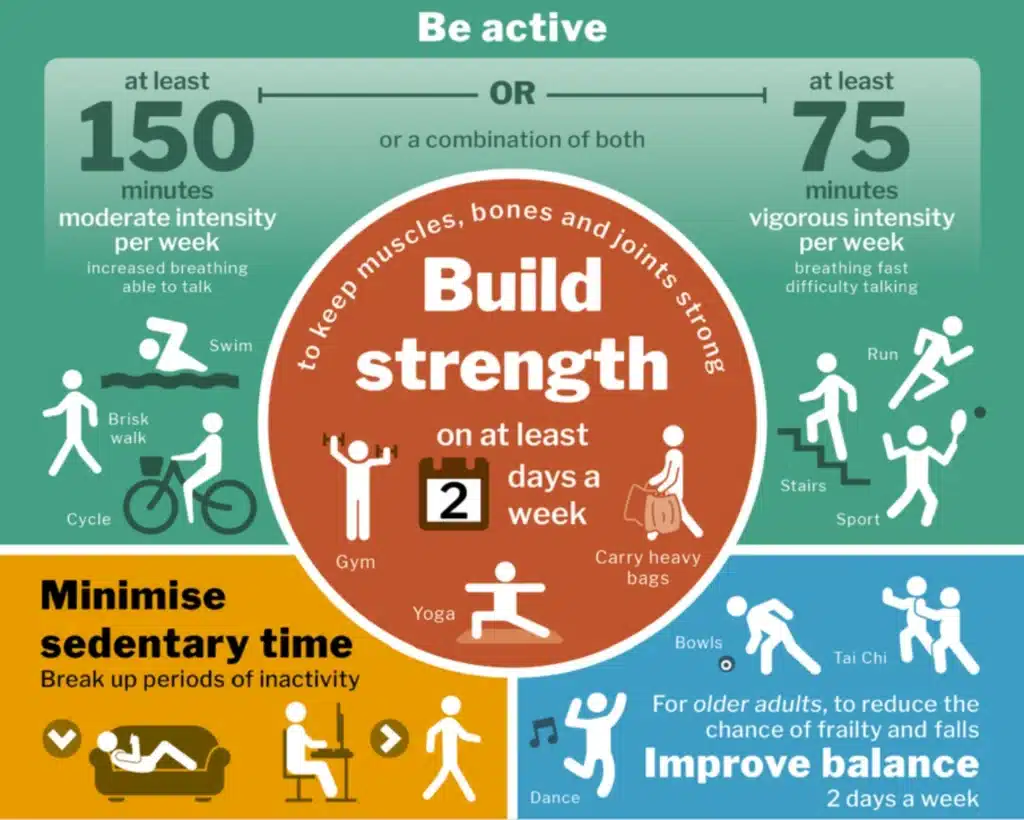
The last part may be new to some of you, but it’s on there. We are mostly familiar with the 150 minutes, but the rest is usually forgotten about and is vital for our health. Even if you do your 150 minutes but spend the rest of the time being sedentary, you are are putting your health at risk. So why is that…
Sitting for long periods is thought to slow metabolism, which affects the body’s ability to regulate blood sugar, blood pressure and breakdown fats for energy. These changes can have a serious negative effect on our health and the development of chronic conditions such as; type 2 diabetes, cardiovascular disease (CVD), obesity, cancer, musculoskeletal health and mental health.
Due to these findings, sedentary behaviour is a leading independent risk factor for chronic diseases and premature mortality. This is quite shocking with the majority of adults spending 9 hours sitting a day! (Not including sleep). This is a factor that affects us all, even writing this blog, I am aware I have been sitting here too long.
But how long is too long? As we mentioned before, this is a relatively new area so no guidelines have been developed yet for how much time we should spend sitting. However recommendations do state to break up long periods of sitting with at least light activity. Australia are ahead on this topic, their recommendations state minimise sitting time, break up long periods of sitting and get up at least every 30 minutes.
More health risks associated with increased sedentary time……
Type 2 diabetes – Prolonged sitting increases the risk of type 2 diabetes. Too much sedentary time impairs the body’s ability to regulate blood sugar correctly and impairs the body’s ability to break down fat for energy usage leading to insulin resistance.
CVD – being inactive leads to weakening of the heart muscle, slows down circulation, increases the risk of high blood pressure, strokes and heart attacks.
Obesity – The slowing of the metabolism with sedentary behaviour means less calories are expended. People are also likely to snack on high calorie low nutrient snacks contributing to more calories in and weight gain.
Cancer – The risk of some cancers is increased with sedentary time. Colon, endometrial and lung cancer risk is increased because sitting can cause chronic inflammation, insulin resistance, reduced metabolism and an increase in obesity.
Musculoskeletal issues – If you don’t use it, you’ll lose it! As simple as that. A lack of movement, weight bearing and stressing the muscles, reduces muscle mass and weakens bones. Also mobility and flexibility are affected from hours in the sitting position with tight weak muscles such as the hip flexors and stretched weak muscles causing back problems and pain.
Mental health disorders – Sedentary behaviour increases some mental health disorders like depression and anxiety by reducing those all important feel good hormones and mood boosting neurotransmitters; endorphins and dopamine. Binge watching tv or gaming often disrupts sleep affecting the circadian rhythm, weight gain and stress.
People may become isolated rather than going out to socialise with real people. There is a lot of negativity online and people fabricating the truth to pretend they have a perfect life. This puts other people under pressure to try and compete. This can lead to further stress and anxiety and take people away from their real friends and being around real people.
So we must address sedentary time, but what can we do to reduce it?
Like any change we try to make, this is specific to you. Whether your young, old or in between, your own circumstances dictate to a degree how we can challenge sedentary time. If you’re young and in school sitting for 5 hours a day, think about how you can incorporate moving into your leisure time. Can you take the dog for a walk, help with chores, a bike ride with family or friends.
The big hitter is probably reducing screen time, this isn’t easy when even homework can be online! What about tech free time or tech free zones for the family, not making it a punishment, but giving everyone time to catch up. For us it’s at the dinner table, as much as we all can be there together, no tech, just conversation.

Adults may have jobs that involve a lot of sedentary time and we still have to go to work! So can the commute be changed to walk/cycle, or stand on public transport. Can you get off one stop earlier and walk, or take the stairs. Standing desks have been very popular lately but not everyone’s boss will stretch to this.
There are however other gadgets such as; under desk pedal machines that are not standing but keep you moving. You can then add in water breaks, toilet breaks, a walk at lunch. Companies are getting on board with this more now and some offer walking groups in work time to get out and away from the screen. My favourite tip I read recently was Martin Lewis always walks while he’s on the phone! What a fab idea, there’s no wonder the man averaged over 26,000 daily steps in 2025!
At home although chores can be boring, they are a great hack to breaking up sedentary time and burning some calories. Trying to make them less boring I usually put on my headphones and sing out loud! Or talk to the dog who has no idea what I’m on about!
Older people – Same here as above really. Many older people are now still in the workplace and have had to adapt to technology and desk jobs. Again it’s doing what is in your capabilities within your circumstances. Look for windows of opportunity that you can get a bit of physical activity in. Going back to some of the old school ways of doing things is never a bad thing.
Top tips:
- Try to get up every 30 minutes from sitting
- Look out for easy wins – stand on the commute, get off one stop earlier or take the stairs
- Walk or cycle instead of drive if you are able
- Use tech to help instead of hinder – set a reminder to stand
- Do activities that suit your goals – whether it’s squats and press ups for strength or getting house work done
- Meet a friend or go out with family as a break whether it is lunchtime or just a break from technology. This also gives you ca hance to catch up, unwind and take notice.
I guess the main and encouraging thing to take away is that even reducing your sedentary time a little, still has a positive impact on your health. Like with any new activity, start with small steps and build it up to be consistent. And let’s be honest, standing up and finding something to do for a few minutes for most won’t be physically taxing, but getting into this new habit may take a bit of motivation and determination.
References
Henson,J. De Craemer, M. Yates, T. (2023). Sedentary behaviour and disease risk. BMC. Public Health. 23. 2048.
NHS. (2022). Why we should sit less.