
Muscle mass is the weight of your muscle tissue which usually comprises of skeletal muscle, smooth muscle (internal organs) and cardiac muscle (heart muscle). We’re usually most interested in skeletal muscle tissue which is for voluntary movement and this is what our training usually targets. Another term that you may hear is lean body mass. This is different from muscle mass as lean body mass includes muscle but ALSO water, bones and organs.
Why does skeletal muscle mass matter?
Skeletal muscle mass controls physical movement and keeps us moving everyday. This is important for posture, mobility, strength, balance and general independence as we age. This is generally what jumps to mind when we think about the benefits of muscle mass, (as well as looking good!), however there are some other benefits you may not be aware of.
Improved metabolism
Building muscle mass increases your basal metabolic rate (BMR). Muscle tissue requires more energy to maintain than fat (adipose tissue). More muscle therefore means we are burning more calories at rest. This is important for weight management. Strength training plays a pivotal role in muscle mass percentage, the good news is this is something we can control rather than genetic or social factors.
Weight management
Muscle mass and weight management is something that is often overlooked. People want to lose weight, they cut calories and see the number decrease on the scales. They then think ‘I’ve lost 4 pound of fat this week!’…..wrong! They will often have lost; water, muscle and a tiny bit of fat. Fat loss doesn’t work that way and long term weight loss often results in a loss of muscle. This reduction in muscle reduces the body’s BMR and makes it harder to lose weight. Other negative effects of low muscle mass then follow, such as: reduced strength, lack of tone, higher risk of falls, and increased risk of type 2 diabetes.
Disease prevention
Specifically type 2 diabetes and muscle mass are very closely linked. Low muscle mass (sarcopenia) is both a risk factor for type 2 diabetes and a consequence of type 2 diabetes. In terms of preventing type 2 diabetes, more muscle is advantageous. Skeletal muscle takes up most of the glucose after a meal so more muscle means increased insulin sensitivity and faster glucose clearance.
Strong bones and joints
During strength training muscle contraction pulls on bones causing them to increase in strength. Hormonal impact of strength training also promotes bone remodelling through mechanisms such as myokine release. Joints also benefit from muscle mass as strong muscles surrounding a joint act as shock absorbers and take the strain off the joint structure. This is particularly important as we age to ease joint stress, especially in the knees and provide better balance and stability to reduce fall risk.
Longevity
Muscle mass is often cited as a crucial, independent predictor of longevity. Higher muscle mass and strength reduces the risk of significant chronic conditions; CVD, and type 2 diabetes. The link between muscle mass and fall prevention along with a reduction in all-cause mortality is highly proven. This shows in terms of metabolic health, disease prevention and physical functionality, muscle mass maintenance is paramount for us all.
What causes muscle loss?
Naturally as we age we lose muscle mass, a process called sarcopenia. This typically starts at approximately age 30, with a 4% loss each decade. There is also accelerated losses of muscle at age 50 and again at age 70 with increases in percentage losses per decade at these intervals. Adults will lose on average 30% of their muscle mass over their lifetime (BUPA).
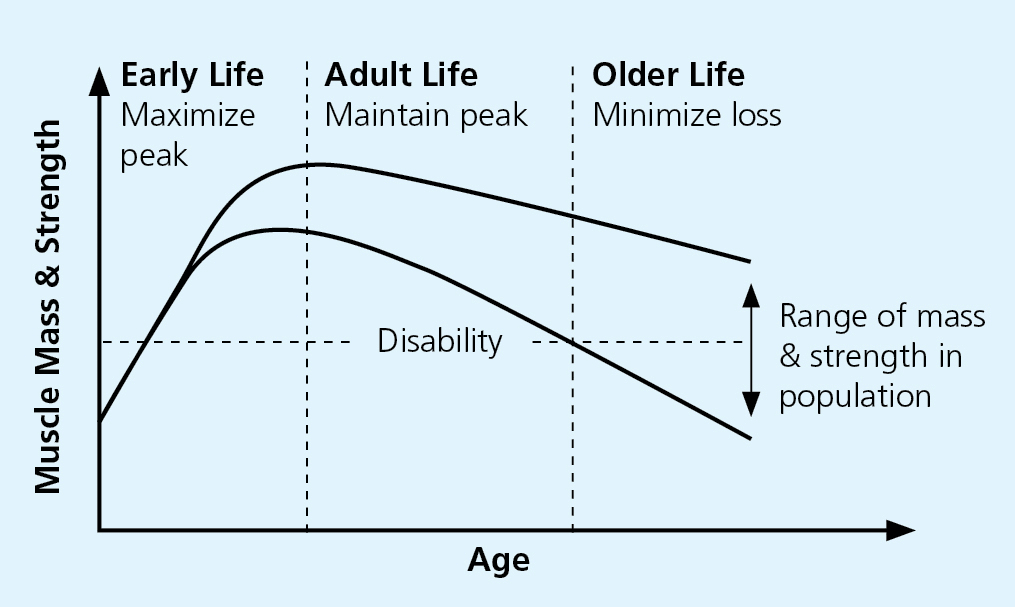
It is common for most people to lose some muscle as they age, even from their 30s! Your muscle cells change and can start to get smaller. This is because your body becomes less efficient in producing proteins and protein degradation exceeds protein synthesis, resulting in muscle atrophy.
One main factor is a reduction in muscle protein synthesis. This is the rate amino acids from protein (food), get incorporated into new muscle protein, a process known as anabolic resistance. The body doesn’t respond with maximum efficiency when it receives an anabolic stimulus such as eating protein or strength training. Linked to anabolic resistance is the body’s response to leucine (one BCAA). Leucine switches on muscle protein synthesis, but as you get older, the same amount of leucine doesn’t have the same impact (Witard 2024).
Now I know all this doesn’t sound very encouraging however there is good news. We have some control over mitigating these age related losses through regular strength training and diet.
What can we do to mitigate muscle loss?
- Regular resistance training – 2-3 times per week. To fit with your fitness goals. Whether this is heavy, moderate, light or gardening and housework. Cardio is also important for mobility, flexibility and reducing sedentary time.
- Diet – Focus on protein intake, especially if you are also trying to lose weight. Also focus on omega 3 intake. (For full details see blog on muscle mass and ageing – diet)
- Hydration – essential for muscle growth as muscles are approximately 75% water. Water increases protein synthesis, transports nutrients to cells and reduces muscle breakdown.
- Managing chronic conditions – Having type 2 diabetes is strongly linked to reduced muscle mass due to poor glycaemic control, insulin resistance and chronic inflammation causes muscle protein breakdown. Managing your condition with resistance training and diet is pivotal.
References
The Association of UK Dietitians. Muscle health, nutrition and ageing
BUPA. Sarcopenia: How good habits can help reverse muscle loss
Wiltard, O. (2024). Why do we lose muscle mass as we age and what can we do to mitigate this? Kings College London