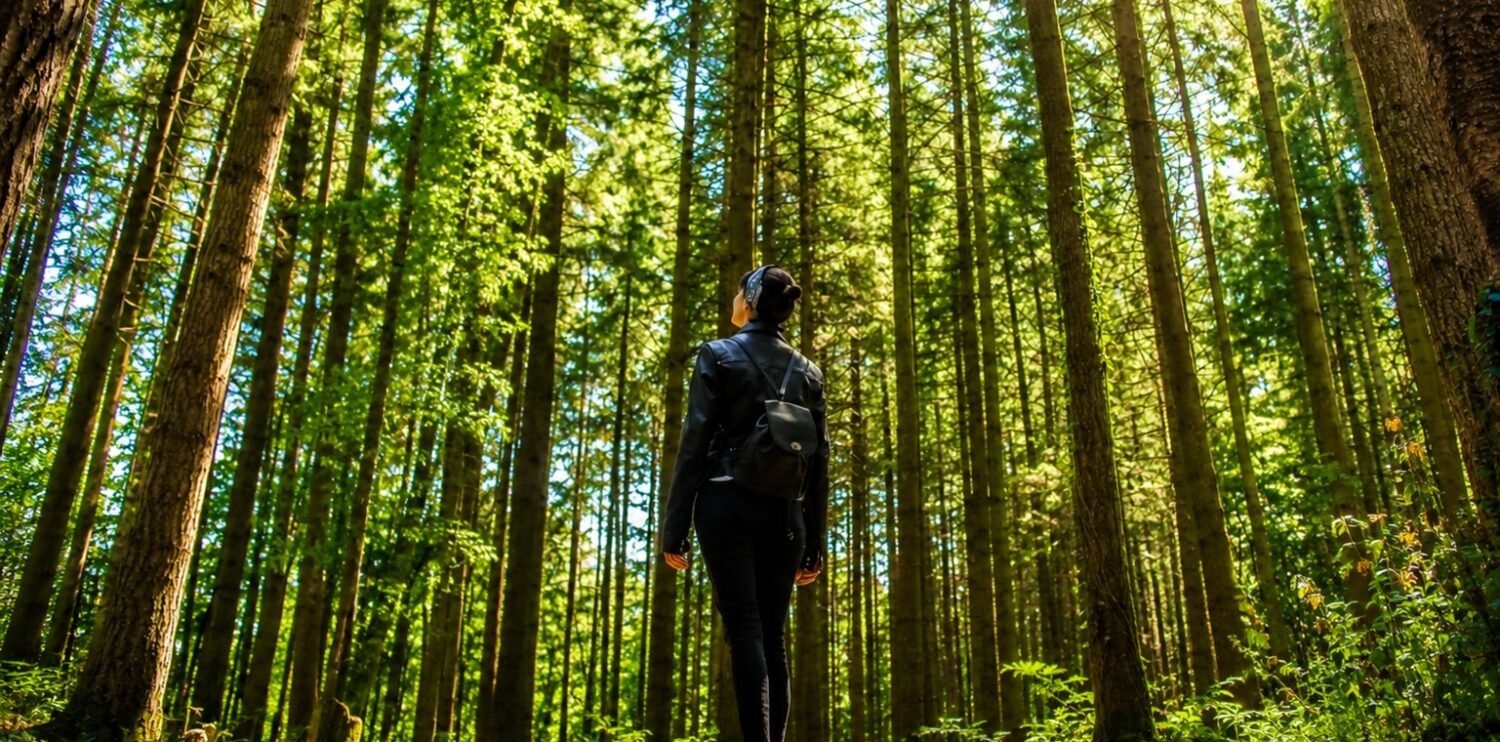
In a world where many of us spend hours indoors, surrounded by screens and constant notifications, forest bathing offers a simple way to slow down, reconnect with nature and support our wellbeing. Forest bathing is a mindful practice that involves immersing yourself in nature (bathing), to help improve your physical and mental wellbeing. The practice originated in Japan over 40 years ago under the name ‘shinrin-yoku’, which literally translates to ‘taking in the forest atmosphere’.
Despite its name, forest bathing does not involve swimming or washing. Instead, it means immersing yourself in the atmosphere of a natural environment and consciously engaging all 5 senses to really connect with nature. By bathing in the sounds, scents, textures and visual cues of nature, we can start to explore the benefits forest bathing offers.
There are no fitness goals with forest bathing, instead the emphasis is on unplugging from digital devices and modern stressors. Being present in the moment is so important and something that most of us don’t do with having such busy lives. Forest bathing is not about achieving a goal or “doing it correctly”. The aim is simply to slow down and notice your surroundings.
Forest bathing is not a form of physical exercise that you may think of like hiking. However it can produce many physiological and psychological benefits to our health.
Physical Benefits
Boosts immune system – Inhalation of phytoncides.
Phytoncides are released by trees and plants to protect themselves from insects and disease. Research suggests that exposure to phytoncides may increase the activity of certain immune cells, including natural killer (NK) cells, which play a role in helping the body defend against harmful cells.
Lower Blood Pressure
The parasympathetic nervous system is activated to calm up down and the sympathetic nervous system is also reduced (the fight or flight activator). In looking at cardiac health, HRV is increased, which is a good indicator of heart health.
Reduces stress hormones
Chronic stress from our busy lives means cortisol and adrenaline are released. These hormones actively suppress immune function. Forest bathing reduces these stress hormones, so the immune system can restore.
Improve quality of sleep
Spending time in natural environments may support better sleep by reducing stress, promoting relaxation and helping regulate the body’s natural rhythms. This is linked to ANS regulation, adjustment of hormones and inhalation of phytocides. A new point to mention here is circadian rhythm realignment, which helps you fall to sleep faster.
Psychological Benefits
Alleviates anxiety and depression
Some of the benefits we have already talked about can also have an impact on our psychological health. In addition to this, spending time in calming natural environments may influence neurotransmitters linked with mood regulation, relaxation and feelings of connection.
Restores cognitive focus
By lowering cortisol and shifting the brain’s focus from demanding tasks, it recharges your working memory and boosts mental clarity.
Combats digital burnout
By having time away from tech, forest bathing works by reversing specific physical and mental exhaustion caused by chronic screen use. Spending time away from screens gives your brain a chance to step away from constant stimulation, helping restore attention and allowing you to reconnect with your surroundings.
Social and Emotional Benefits
Promotes mindfulness
Forest bathing provides an outward, uncomplicated environment which distracts from the internal cycles of worry. Using all 5 senses keeps you in the present, which many people find hard or frustrating with traditional sitting meditation. The slow pace of forest bathing signals the brain to slow down and anchor itself in the present.
Community connection
Although forest bathing can be done solo, it can also be done in a group. Stepping away from tech can remove barriers between people through a shared experience. Engaging in an outdoor program is shown to increase social connection in many people groups. Without distractions, people can feel mutual support, shared awe and a connection to the local environment.
Where to do Forest Bathing
You can practice forest bathing in any natural green space ranging from your own garden to specialised wellness trails. To maximise the stress reducing benefits of your environment, look for a space that has a; high canopy, minimal human-made noise and a safe terrain.
Tips to get Started
- Start small and build a habit
- Go slow and engage the senses
- Plan your spot
- Turn off notifications
- Ease back into your usual routine at the end of your practice