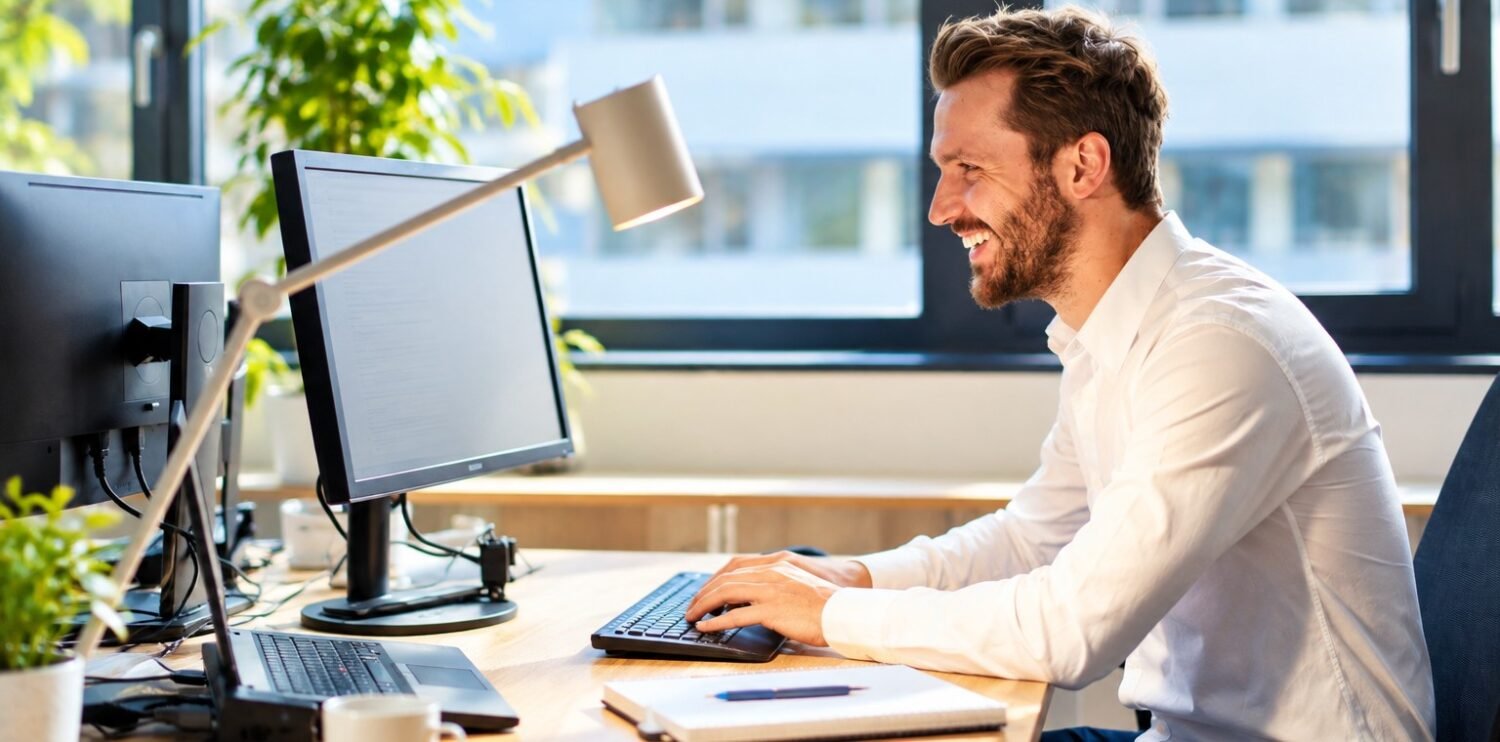
Many of us spend much of the working day sitting at a desk. Add a commute and time spent sitting at home, and it can be difficult to get enough movement into our daily routines.
While changing jobs isn’t always practical, there are small steps we can take to counter some of the effects of prolonged sitting. Stretching is one option. It can help maintain flexibility, ease muscle tightness and provide an opportunity to move during the working day.
However, stretching isn’t the whole answer. Combining it with regular movement breaks, physical activity and strength exercises can help support your overall health and wellbeing.
Negatives of sitting
The physical impact of desk work can take its toll on the body, regardless of age. Sitting regularly for extended periods can cause specific physiological changes that can affect your posture and your comfort.
Muscle tightness and reduced flexibility
Spending long periods sitting can leave some muscles feeling stiff or tight, particularly around the hips, chest and back of the thighs. This tightness can restrict your range of motion or cause discomfort when moving, which may lead you to limit how far you move a joint.
Working at a screen can also encourage habits such as leaning your head forwards (sometimes called tech neck) or rounding your shoulders. Spending long periods in these positions may contribute to discomfort and stiffness around the neck, shoulders and upper back.
Reduced muscle activity
When we sit for long periods, muscles such as the glutes (buttock muscles) are less active than when we’re standing, walking or climbing stairs. Over time, spending too much time sitting and not moving enough may contribute to reduced muscle strength and changes in how effectively we recruit certain muscles during movement.
You may have heard the term “dead butt syndrome”, an informal term sometimes used to describe reduced glute activation or discomfort around the hips and buttocks. Although sitting doesn’t literally switch off these muscles, prolonged inactivity and a lack of strengthening exercise can contribute to reduced muscle strength and function.
Circulation and lymphatic drainage
When we move, muscle contractions help blood return to the heart and assist the flow of lymph fluid through the lymphatic system. Lymph carries excess fluid from body tissues back towards the bloodstream and plays an important role in immune function. Prolonged sitting reduces the muscle activity that helps support these processes, particularly in the legs.
Benefits of stretching
Supports posture and mobility
Spending hours in the same position can leave the hips, chest, neck and shoulders feeling stiff. Gentle stretches can help maintain flexibility and make it more comfortable to move through different positions. Combined with regular movement and strength exercises, stretching can form part of an approach to maintaining mobility and supporting comfortable posture.
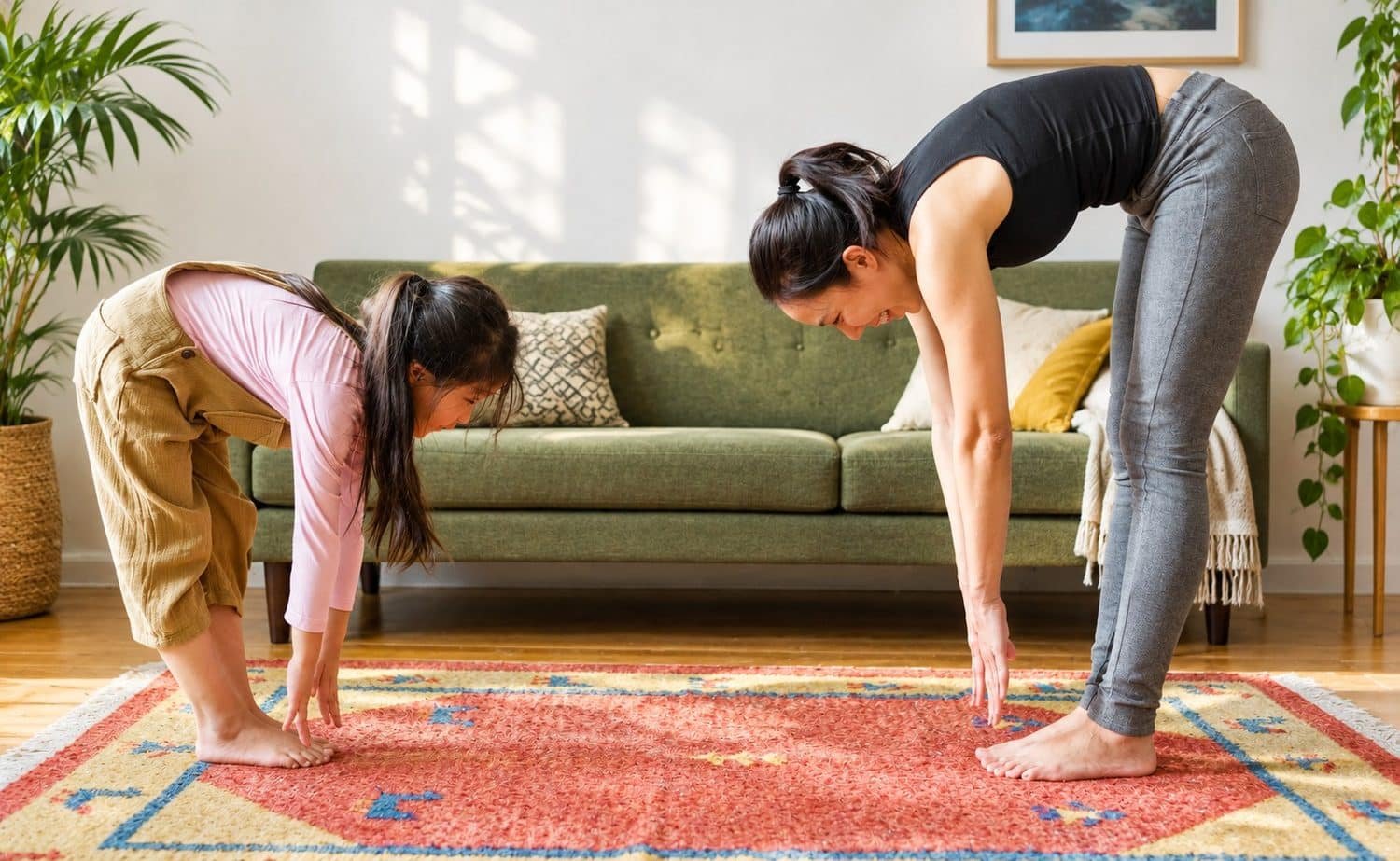
May ease muscle tension and discomfort
Sitting at a computer for long periods can leave the neck, shoulders and back feeling stiff or uncomfortable. Gentle stretching and changing position may help ease this tension and improve comfort. However, persistent or worsening pain shouldn’t be ignored, and stretching isn’t a substitute for appropriate medical advice when needed.
May encourage local blood flow
Gentle stretching lengthens and contracts muscles, helping encourage blood flow through the tissues. Stretching and contracting muscles can also help lymph fluid move through the lymphatic system, which returns excess fluid from tissues to the bloodstream and plays an important role in immune function.
Stretching isn’t the whole solution
While stretching can help maintain flexibility and ease stiffness, it cannot counter every effect of prolonged sitting. A more effective approach combines stretching with regular movement and physical activity.
Here are a few simple ways to break up your working day:
- Take regular movement breaks: Stand up, walk around or move your legs regularly rather than remaining in the same position for hours.
- Build more walking into your day: Walk during your lunch break, take the stairs or walk while making phone calls.
- Strengthen your muscles: Include exercises that work your glutes, back, legs and core as part of your regular fitness routine.
- Set up your workstation well: Adjust your chair, desk and screen to suit you, and change your position throughout the day rather than trying to maintain one perfect posture.
You don’t need to make all these changes at once. Start with one or two that fit your routine and build from there.
Six desk stretches and mobility exercises
Perform these stretches and mobility exercises gently and with control. You should feel a mild stretch, not pain, tingling or numbness. Stop if an exercise causes discomfort or unusual symptoms.
You don’t need to do all six at once. Choose one or two to try during a break in your working day, or use the routine when you want to ease stiffness after sitting for a while.
Neck and shoulder
- Neck stretch: Sit tall, keep your shoulders down, and slowly tilt your head toward your shoulder until you feel a light stretch. Hold for 10-20 seconds and repeat 3 times on each side.
- Shoulder rolls: Gently lift your shoulders up toward your ears, roll them backward in a slow circle, and relax down. Repeat 5 times.
Upper body and back
- Chest stretch: Sit upright, pull your shoulders back and down, extend your arms out wide, and gently push your chest forward and upward. Hold for 5 to 10 seconds and repeat 5 times.
- Upper body twist: Sit tall, cross your arms over your chest or place one hand on the back of your chair, and gently twist your upper body to one side without moving your hips. Hold for 5 seconds and repeat 5 times per side.
Lower body and leg moves
- Hip marching: Sit upright away from the back of your chair, hold the sides for support, and slowly lift one leg with your knee bent as far as comfortable. Lower it down with control and repeat 5 times for each leg.
- Ankle stretch: Straighten your leg out in front of you, point your toes away from you, and then pull them back toward your body. Repeat 5 times for each foot
Small changes can make a difference
Spending long periods sitting can contribute to stiffness, discomfort and reduced physical activity, but you don’t need to overhaul your working day to make a positive change.
Stretching can help maintain flexibility and ease muscle tension, while other forms of activity help support strength, mobility and overall health.
Start small. Try a few stretches between tasks, get up regularly and look for opportunities to move more throughout the day. The aim isn’t to eliminate sitting altogether, but to avoid spending hours at a time in the same position.
Your body is designed to move, so give it more opportunities to do just that.