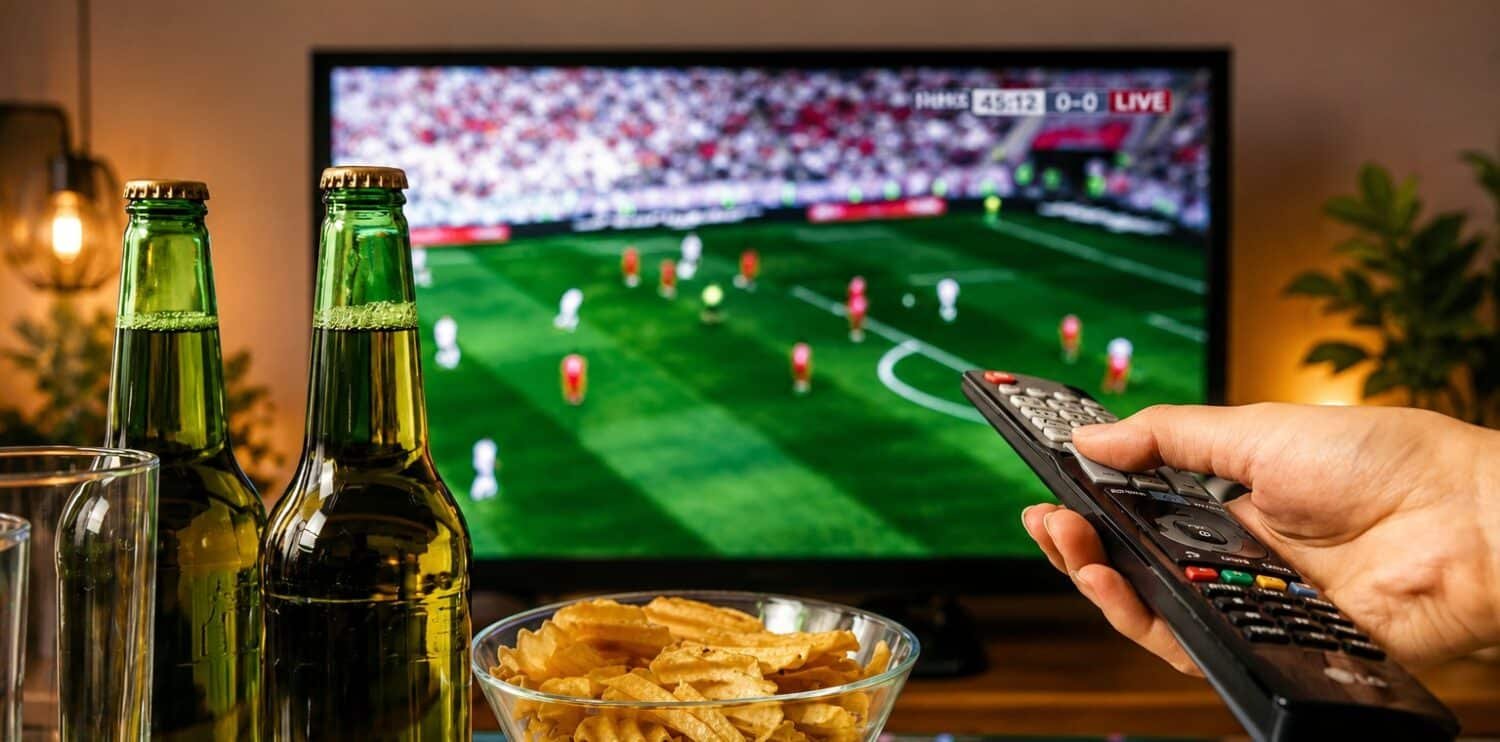
A summer of sport! Most summers, including this one coming up, there is always so much sport for everyone to watch. Whether it’s the; women’s euro football, the men’s euros, the football world cup, Wimbledon, the Olympics. Paralympics, US Golf Open, Tour de France, you name it, it’s been in the last few summers! For the sport fanatics this has meant a lot of time in front of the tele (except the lucky few getting tickets to watch live).
I think we all agree it’s great to support our teams and spend time with our friends, but are there any measurable benefits that we can gain from watching sport? The benefits from watching sport in person are well established, especially if the sport is outside and we are standing. These include; increased life satisfaction, increased self worth, reduced loneliness and reduced sedentary time. So whether it’s tennis, football. cycling, cricket or all of the above, we have certainly been entertained.
However do any health benefits occur if we are watching sport on the television rather than in person? A consequence of watching sport on tv often comes with prolonged periods of sitting, snacking on unhealthy snacks and maybe having a beverage or 2! So can there really be any health benefits to our wellbeing?
The benefits of watching Sport on TV
Physical benefits
So your team is winning, 2 minutes to go, you feel you’re starting to get antsy, looking at your watch and wishing the time would speed up. You can feel your heart rate has gone up and your breathing a little quicker. But you may be surprised to know these physical changes to some degree mimic the effects of moderate physical activity!
A study from the University of Montreal found that watching ice hockey on TV substantially increased heart rate of people in the study by an average of 75%. This is the equivalent of moderate intensity!, especially in overtime and during scoring chances (Dillner 2017). However although heart rate rises, this does not carry the same benefits on cardiovascular health as exercise does. There is also the negative effects that this rise in heart rate and blood pressure can be a trigger for a cardiovascular event (Shmerling 2024).
Another physical benefit you may never have associated with sitting watching sport is that you can actually burn calories! I can hear you saying, yeah right, what like 10-20 calories? But no!
A recent study from Loughborough University concluded that watching the Olympics can in fact help you lose weight. Sitting watching sport can actually burn up to 540 calories over a 90 minute period watching your favourite sport! (Gajbhiye 2024). The study and many others have showed that different sports have led to different amounts of calories burned depending on the sport, the duration and the importance of the sport to the individual. How bizarre is that?!
The short term physical stress from watching sport is known as eustress, this can enhance mental/cognitive performance through brain, musculo-skeletal and cardiovascular function. So short bouts of eustress can be positive, it’s why the ‘flight or fight’ response evolved, it can adapt and helps us survive.

In the context of football for example, eustress is the perceived danger of losing, giving away a penalty, or a goal being scored. There is a short term boost in heart rate, excitement and motivation. As it is only short, we can cope (Bowling 2023).
Too much stress will have an adverse effect on the body. However the stress of watching your sport in short durations could make you more alert and sharper. So maybe a good excuse to get on with some work as soon as the game is over??? 😉
Psychological benefits
Watching your favourite sport can help with stress relief. People feel relaxed and watching sport on tv can act as escapism for people’s busy lives or stressful situations. Your team winning or celebrating a victory leads to happiness. The brain’s reward centre is activated, releasing feel good hormones. Some studies have even shown long term viewing can change brain structure with increased grey matter volume in the brain’s reward circuits.
A big one in terms of wellbeing is studies show watching sport lowers depression symptoms. Although taking part in sport offers greater reduction, as this is not possible for some people, watching sport still provides some great results. (Guo 2024). Also, watching a sports person can be very inspiring and motivating for people and encourage them to take part or even to be more resilient in general life.
Another psychological benefit of watching sport is making a social connection with people and having a sense of belonging. The bond you share can be very strong and this makes people feel less isolated and lonely as they share this connection. Watching sport with others also offers social benefits such as improved relationships with others, better social interaction opportunities and pleasure.
So there we have it, who thought watching sport could be so interesting and have such an impact on our wellbeing. I think most people would be aware of the apprehension/nerves that can be felt watching their sport, but maybe a little surprised to know we could be burning calories and the short term stress is good for cognition.
The psychological benefits of feeling happy, less isolated, part of a community, motivated and a reduction in depression symptoms show watching sport can help make up part of our mental health toolkit. Remembering long term stress will have a negative effect on our health, so enjoy the game and don’t let it stress you out.
References:
Bowling, G. (2023). Stress and Sport – The link between eustress and watching sport. Nuffield Health.
Dillner, L. (2017). Is watching sport as good as playing it? The Guardian.
Gajbhiye, S. (2024). Watching the Olympics can help you lose weight.
Guo, J. Yang, H. Zhang, X. (2024). How watching sports events empowers people’s sense of wellbeing. The role of chain mediation in social interaction and emotional experience. Frontiers in Psychology. Vol 6. Pp15.
Scmerling, R, H. (2024). Can watching sports be bad for your health? Harvard Health.